A real pitch to CBS News on how to reach Gen Z. I was the only UX/UI designer on the team. The pitch landed strong. CBS responded well across all six proposals.
AAU's Future Agency pairs student teams with real clients. Our brief from CBS News was to figure out why Gen Z isn't watching and propose something concrete about it. The team handled research, strategy, and presentation. I owned all the UX and UI: the concepts and the mockups. We presented to people at the network at the end of the semester and got strong feedback across the board.
We ran a survey with 50 Gen Z respondents before touching any design. The goal was to understand real habits, not assume them. A few things surprised us.
Short-form, visual, immediate. That's what Gen Z responds to. And at the bottom of that list sits the one format CBS has built its entire revenue model around.
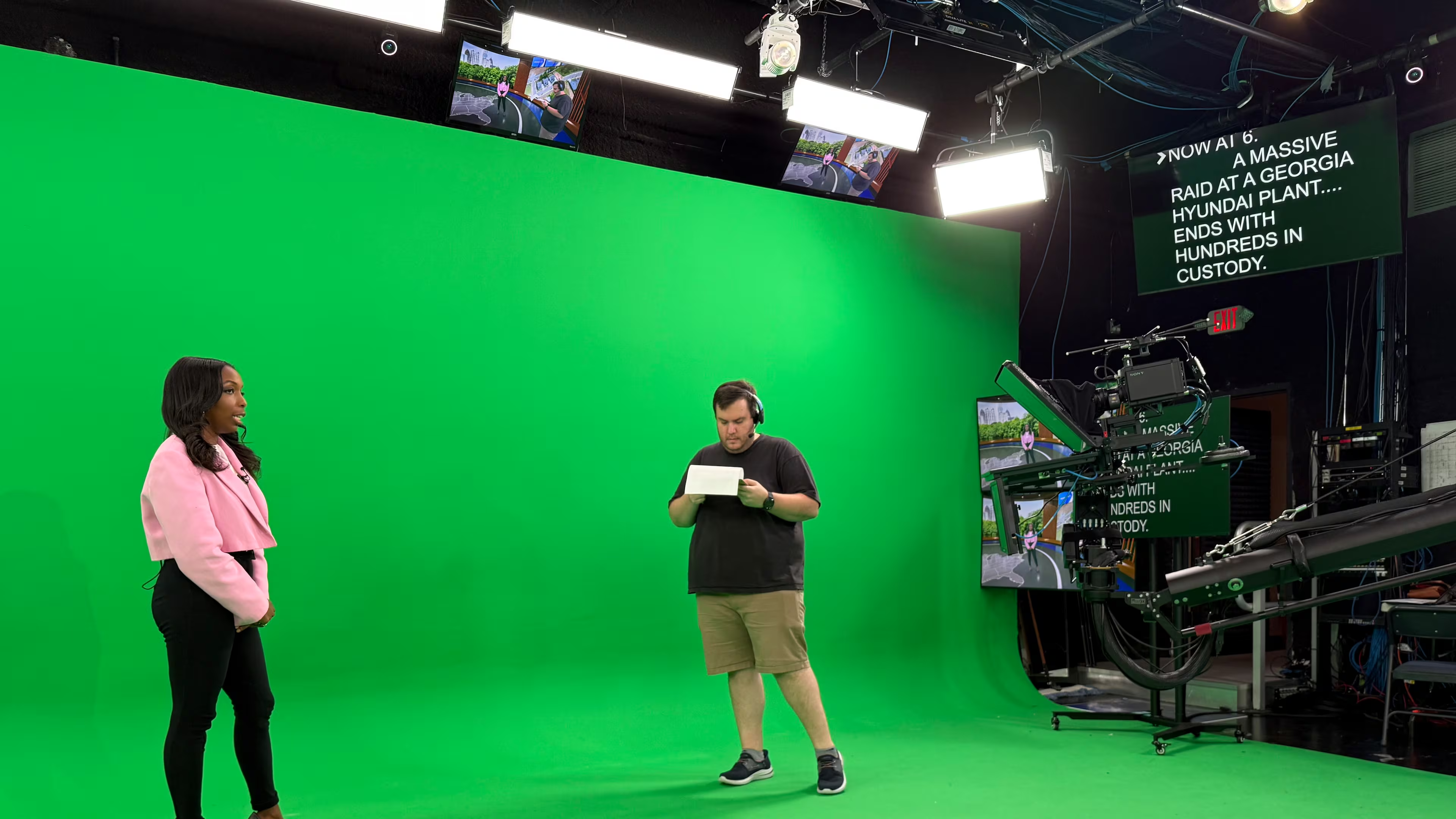
"The studio has evolved. But the experience model has not."
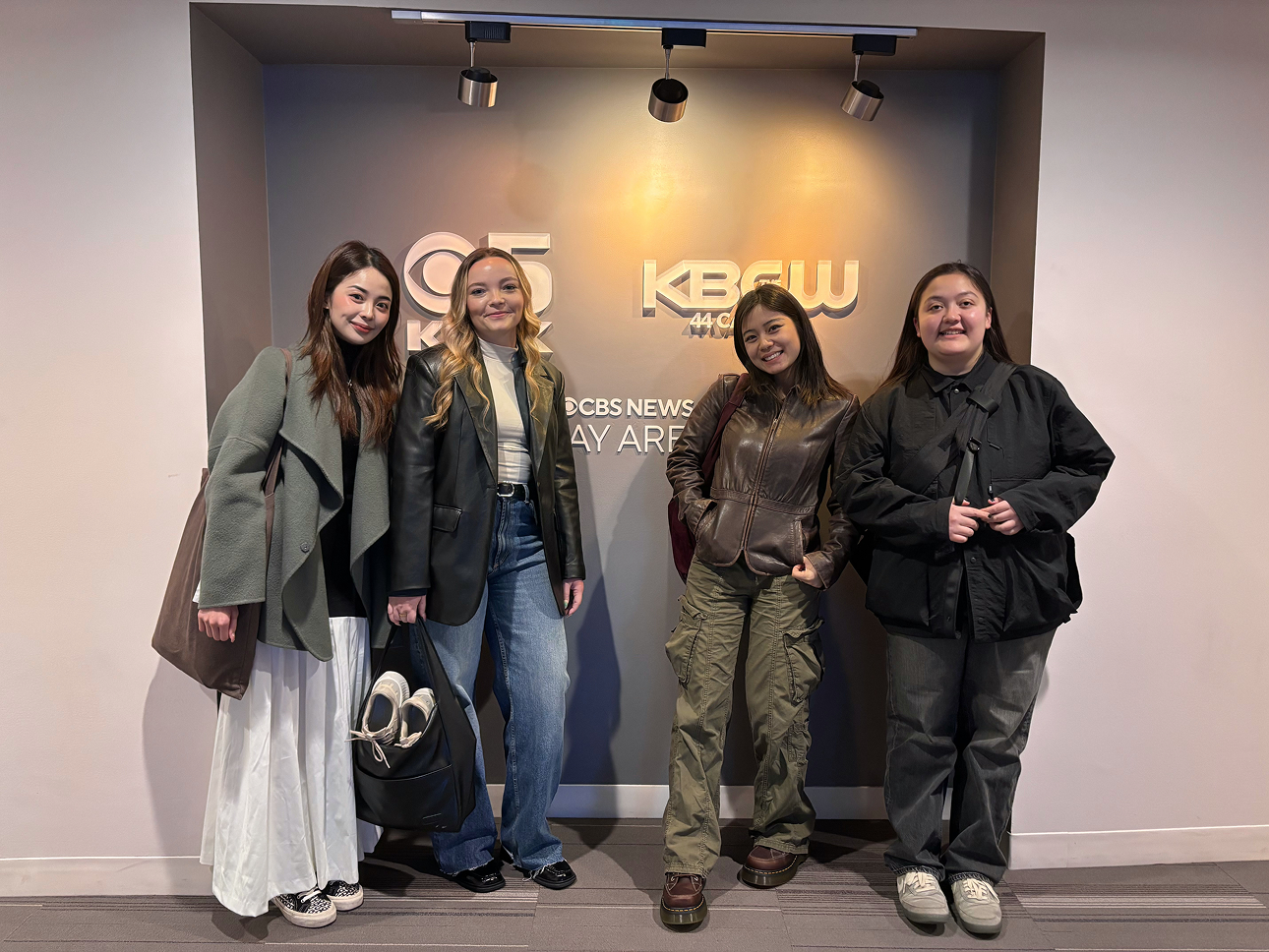
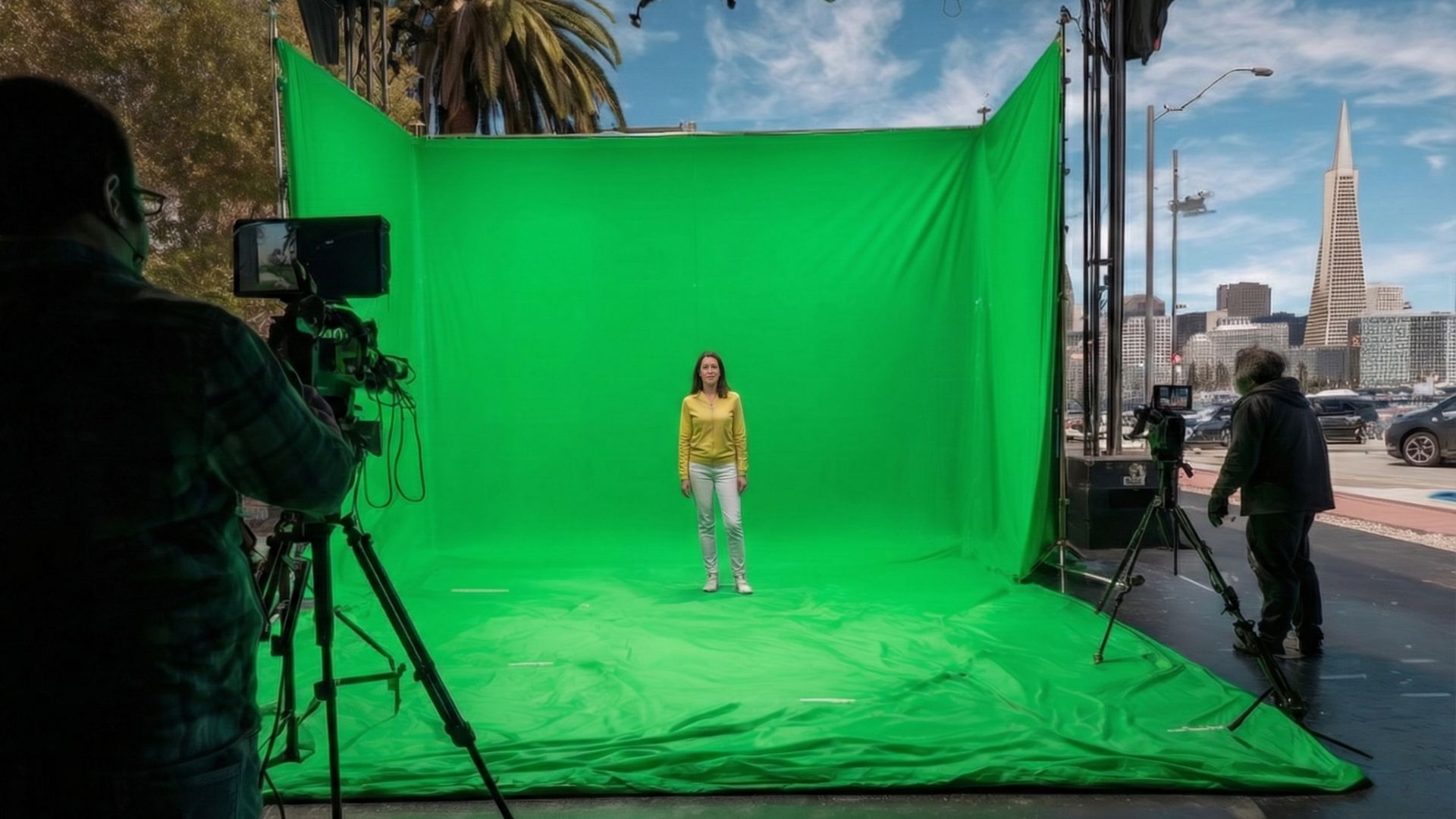
During our visit, we saw they've fully transitioned to green-screen infrastructure. That confirmed our core insight: the visuals have evolved, but the experience is still one-way.
Big Idea
CBS already has the eye as its symbol. The name comes from the three things our pitch kept returning to: truth in the reporting, trust between the anchor and the audience, and transparency in how the news is made. Gen Z doesn't want a broadcast. They want to see inside.
We broke the pitch into six concepts across studio design, AR graphics, audience interaction, and physical activations. Each one could stand alone, but they were designed to work together.
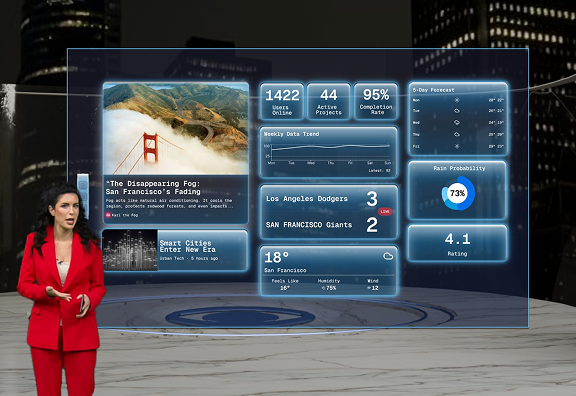
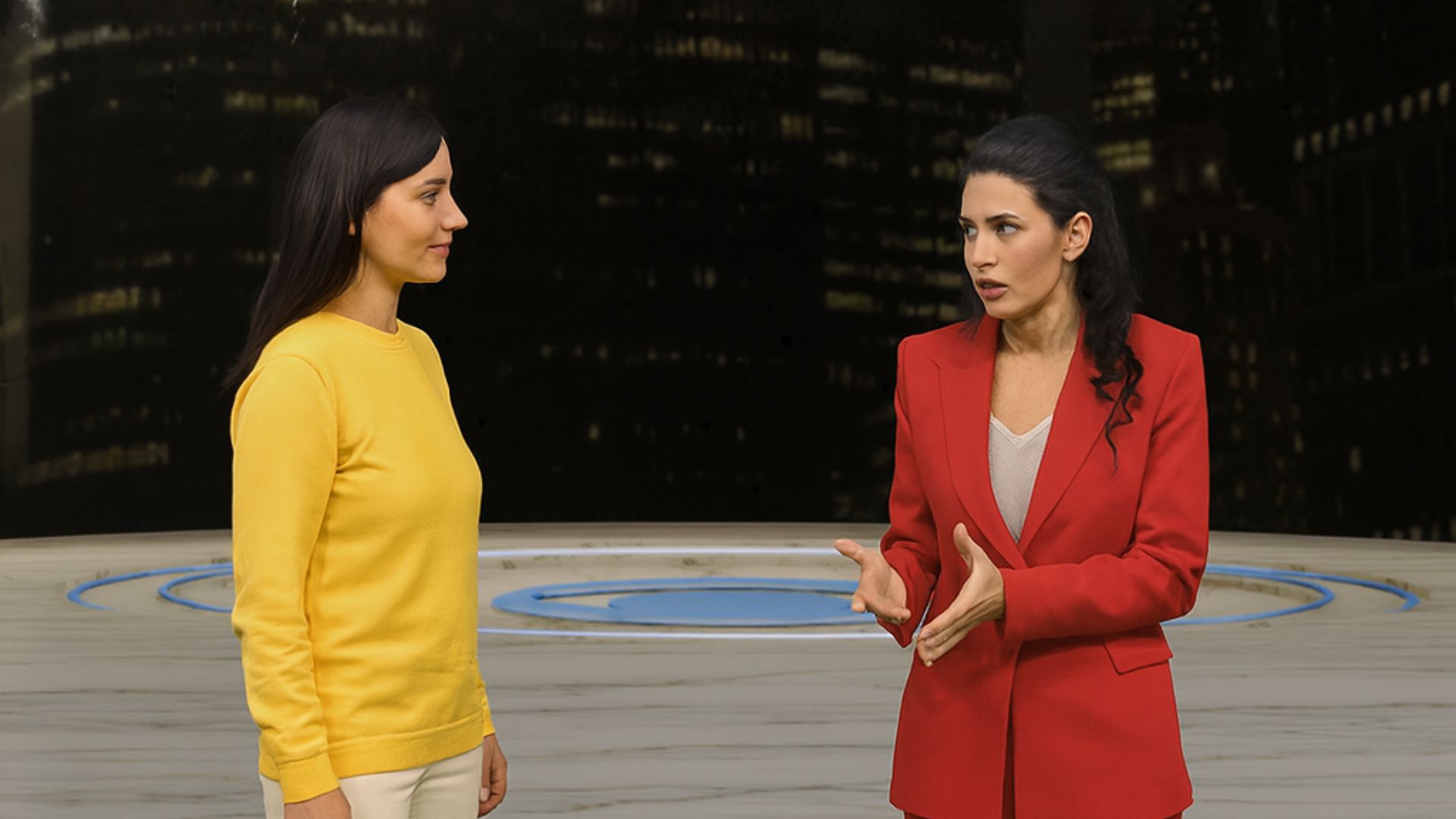
CBS has already moved entirely to green-screen, but the environment stays largely static. Both concepts here look at how to make that virtual space feel more alive. KPIX Set 2.0 brings warmth and depth. The Tube places the anchor inside a living scene rather than in front of one.
KPIX Set 2.0 proposes a warmer, more spatial environment with natural light tones and a real sense of depth. The studio is designed to feel like an actual place rather than a screened-in backdrop.
News is dense. Maps, live data, breaking updates. A lot has to land in a short window. These two concepts look at how to make that information work better on both sides of the camera: anchors who can actually interact with data on air, and viewers who can follow the story without losing the thread. One is a modular panel system. The other lets anchors control AR graphics on set with their hands.
Inspired by the gesture interfaces in Iron Man, this proposal lets anchors reposition and expand AR graphics with their hands. No controller, no keyboard. They control the visuals directly while staying on camera.
The studio doesn't have to stay in the studio. These three concepts use AR and green-screen to bring real locations, historical moments, and people from San Francisco's past directly into the broadcast. The anchor stays on set. The world comes to them. A street corner, an archival moment, a figure who shaped the city. All of it becomes part of the newsroom.
Green-screen capture places reporters inside any location (past or present). A reporter could stand at Union Square while broadcasting from the studio. It's not new technology. The point was to actually use it as a storytelling tool, not just a backdrop.
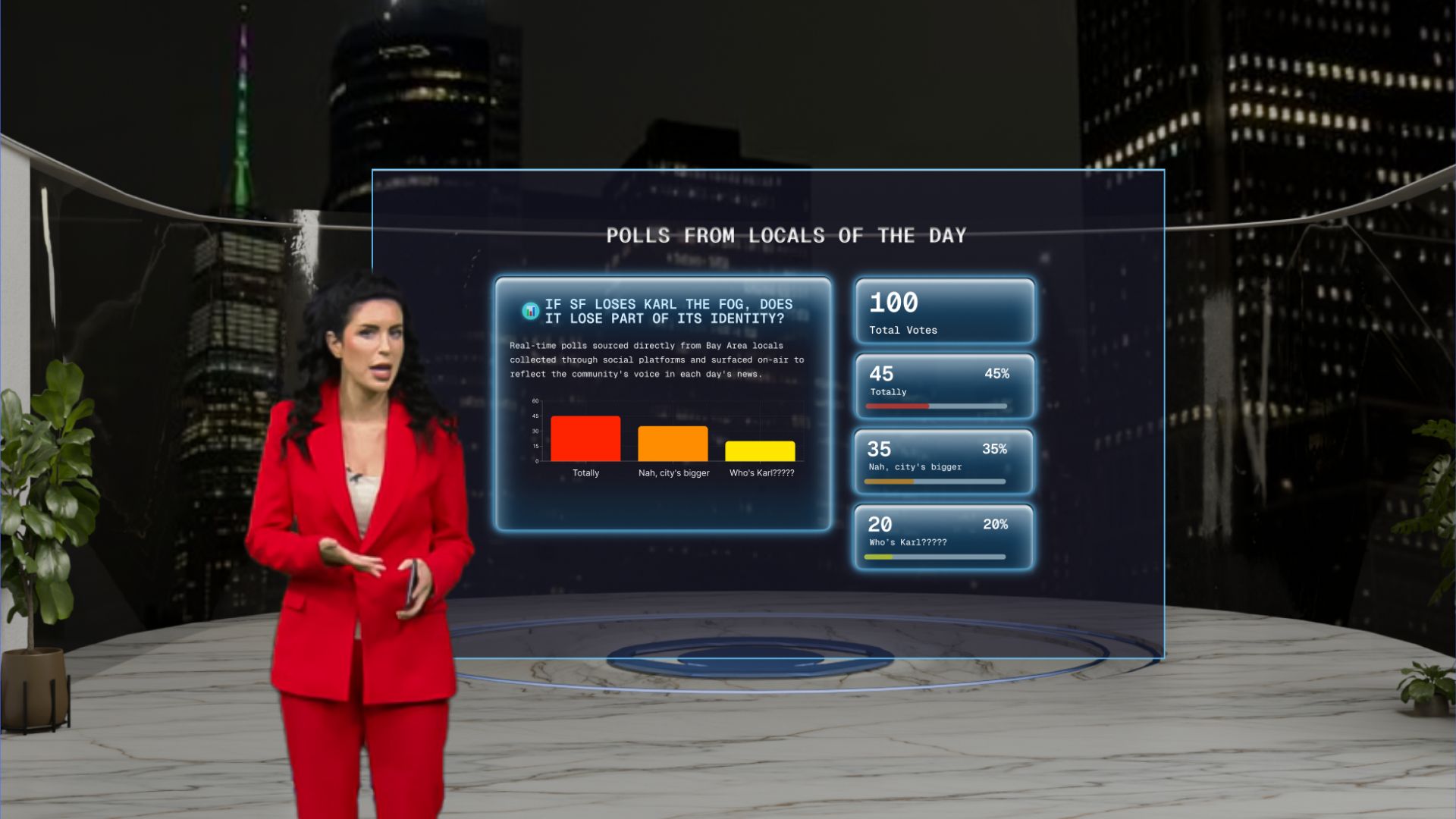
Based on our research, Gen Z spends a huge amount of time on their phones, constantly switching between Instagram, TikTok, and other social apps. At the same time, CBS is still mainly experienced as a traditional TV broadcaster. So our goal here is to build a bridge between those two worlds: bring CBS onto the devices Gen Z already live on, and then bring them back to the live news experience.
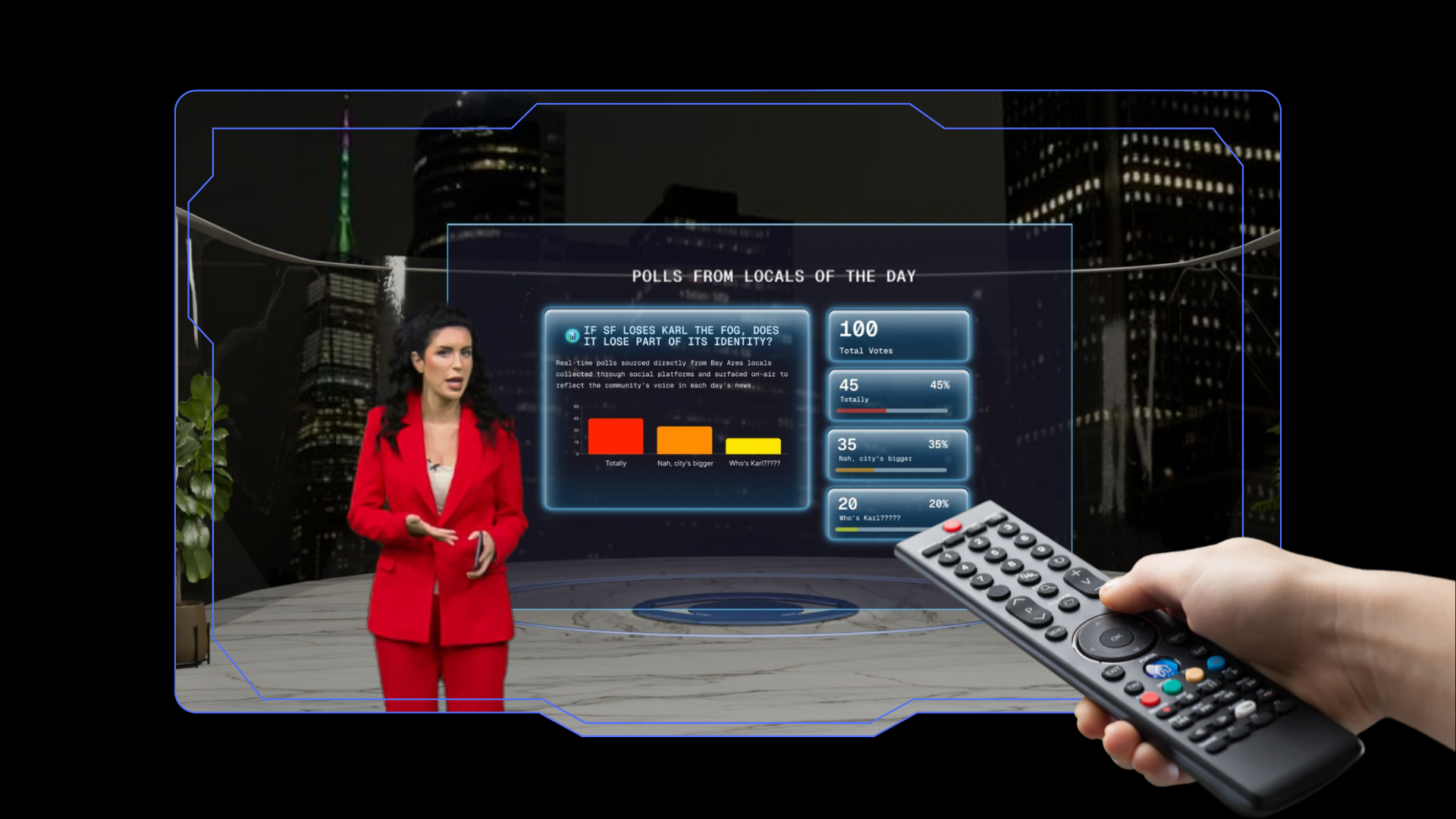
We start with a social media question that appears on Instagram, TikTok, or inside the CBS app. For this prototype we chose the question: ‘If San Francisco loses Karl the Fog, does it lose part of its identity?’ Karl the Fog is the nickname people in San Francisco give to their fog, and it even has its own Instagram account with a big following. Because Gen Z already know Karl from memes and social media, this topic feels fun and familiar, but it is still about local identity and climate. Viewers can vote directly where they already are, without leaving their favorite apps.
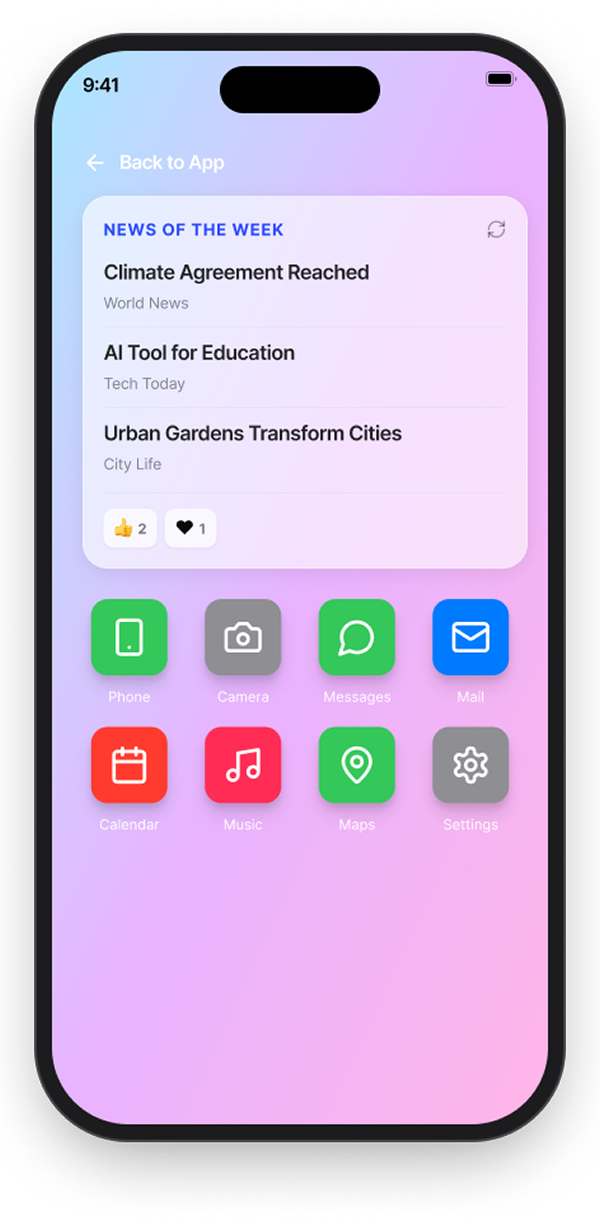
I designed the Friend App as four screens: a main feed with For You, Groups, and Nearby tabs; a fact-check view with credibility ratings; a Find Your Friends map; and a home screen widget. The widget puts a live CBS headline on the lock screen without requiring anyone to open an app.
This section covers physical activations in San Francisco. The idea was to take CBS out of the TV and into spaces where people already gather, using projection mapping and AR pop-ups to make local news something you can actually show up for.
This concept uses projection mapping to broadcast CBS news visuals onto the buildings and walkways of Union Square. People passing through would see local stories at city scale, in the open air, without needing a screen or an app.